12: Brown Pelicans

Dear Friend,
How are things in your world? We hope that this week is off to a good start.
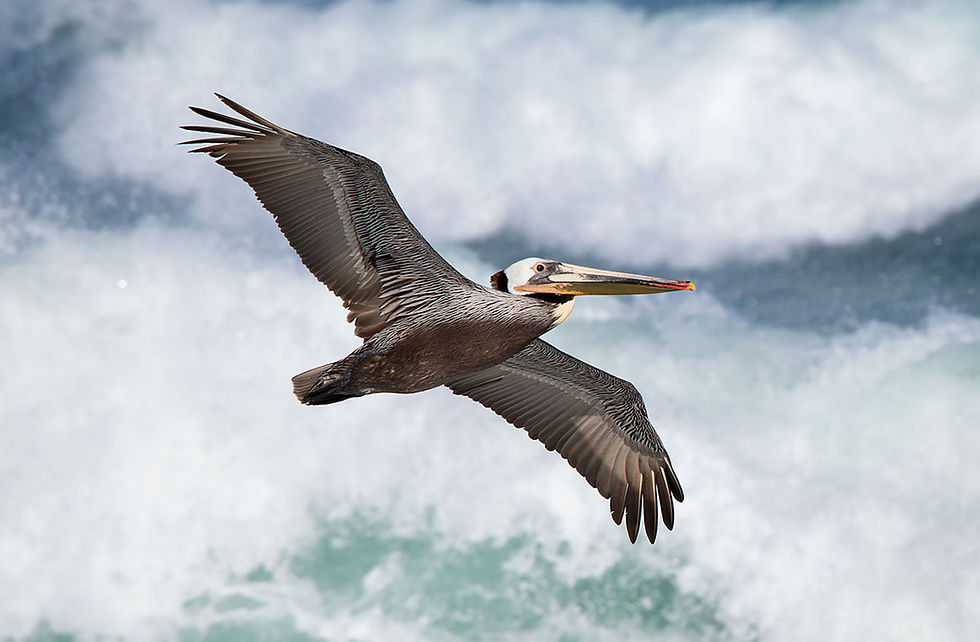
You may remember that Theodore Roosevelt was the President of the United States, September 1901 through March of 1909. In early March of 1909, President Roosevelt put forward the first National Wildlife Refuge, ‘Pelican Island National Wildlife Refuge’ in Florida, along the coast.
People had been killing Brown Pelicans, whether it was for feathering women’s hats or because fisheries felt that pelicans were eating too many fish, after existing for over 30 million years, Brown Pelicans were nearing extinction.
Developed in the 1940s, DDT is a pesticide that grew in popularity in the 1950s and 60s, combatting insect borne diseases like malaria, bubonic plague, and was used on animals and people to kill fleas, bed-bugs, body lice, etc. It was then discovered that DDT (very-probably), (among other tragic things), led to lethally-thin bird-egg shells. This (is believed to have) resulted in non-growth of many bird populations, including Pelicans. DDT was banned in 1972. (There are some scientists that still wish to dispute the dangers of this pesticide).
Anyway, fast forward to 2026, the number of existing Brown Pelicans is in the three hundred-thousands, obviously, no longer on the endangered species list, but they still face many challenges.

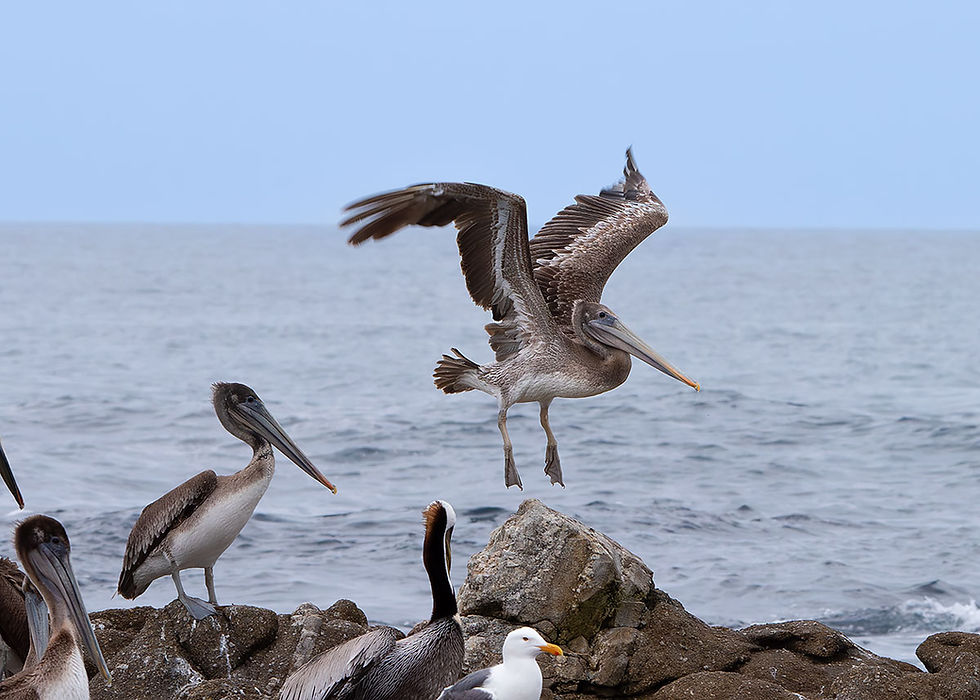
Pelicans choose nesting sites that are far away from people, predators, other perils. They tend to live in large groups.

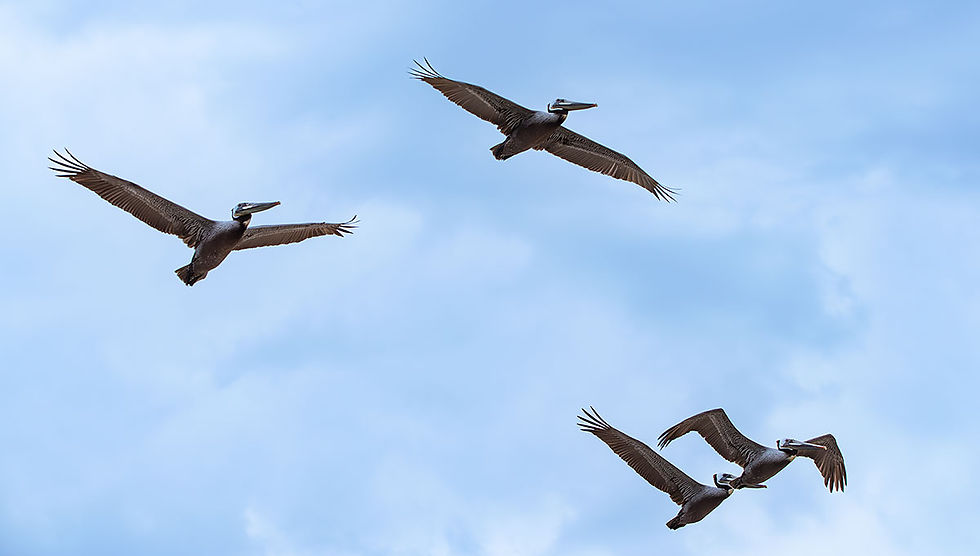
A group of pelicans is known as a ‘pouch,’ or ‘pod,’ a ‘squadron,’ or a ‘scoop,’ and if they are fishing together, they are sometimes called a ‘fleet.’


I’m sure you’ve read sign posts on fences warning that a trail or nature area is ‘Closed,’ and the sign may or may not give a reason. Some signs plead with us not to disturb the animals or birds ‘beyond the fence,’ yet, we can’t see any of those creatures. Often, people want to know why they aren’t allowed to do something, and they want the given reasons to make sense.
Though creatures are resilient, their ability to balance in their environment can be wildly fragile.
For instance, since pelicans use the warmth of their feet to incubate their eggs, it is best not to startle them. A parent’s sudden launch from the nest can result in a nest full of crushed eggs. That doesn’t mean that pelicans are idiots, they’re actually very intelligent. And even smart people can get startled and drop their babies. (Yes, it’s a thing).


Brown Pelican couples work together toward a successful hatching. The mothers usually lay 1 to 3 eggs per year. And though at least one of the parents stay with the babies for around 6 weeks after the eggs hatch, statistically, only one third of brown pelican offspring survive.
Pelicans are found on every continent except for Antarctica (too chilly for pelicans).
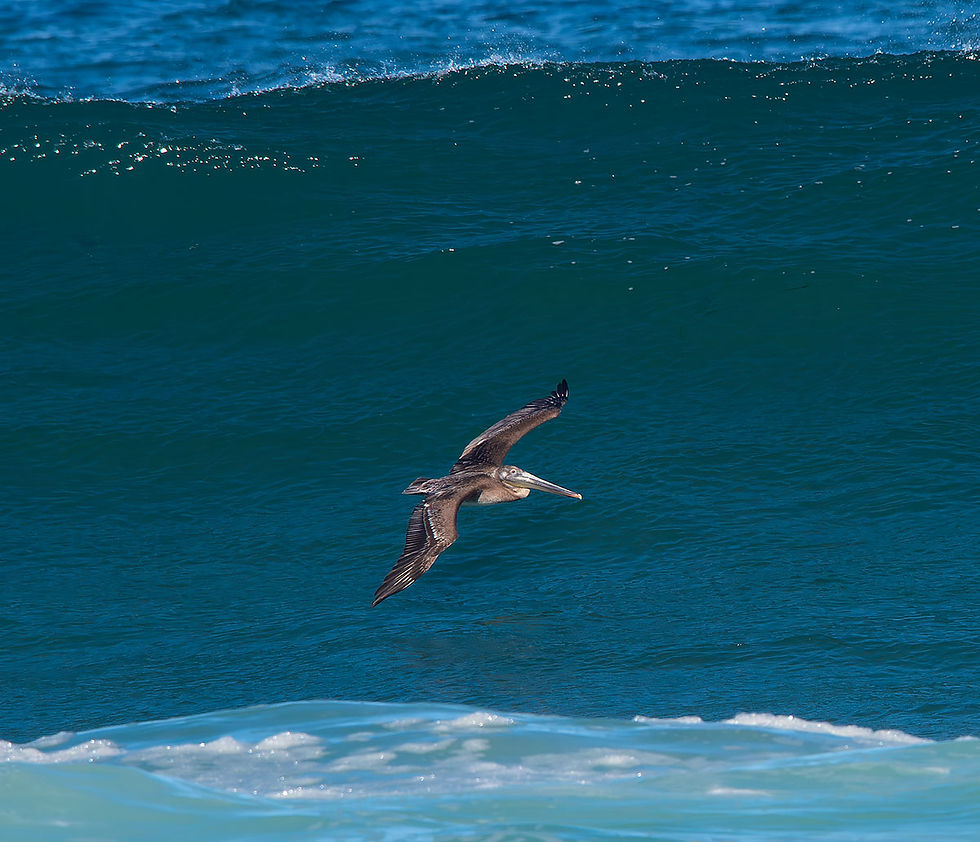
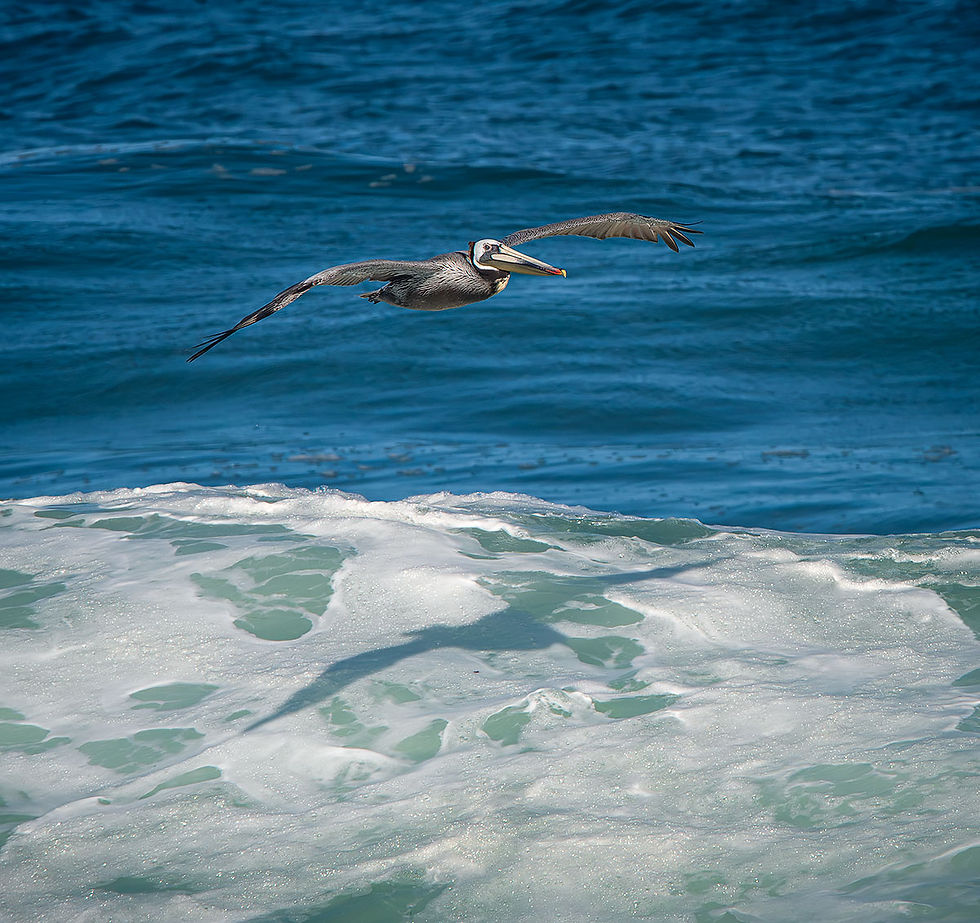
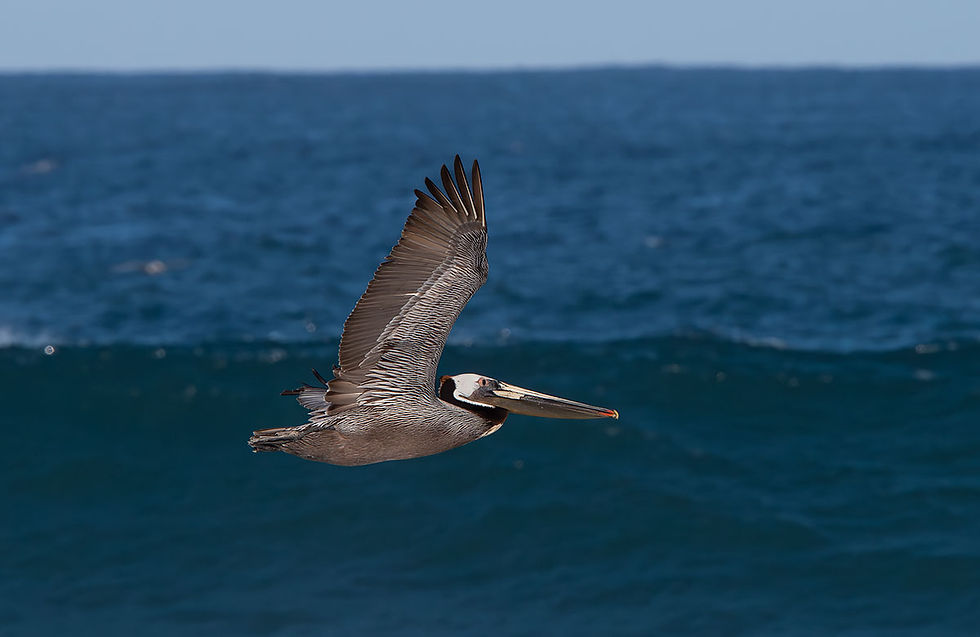
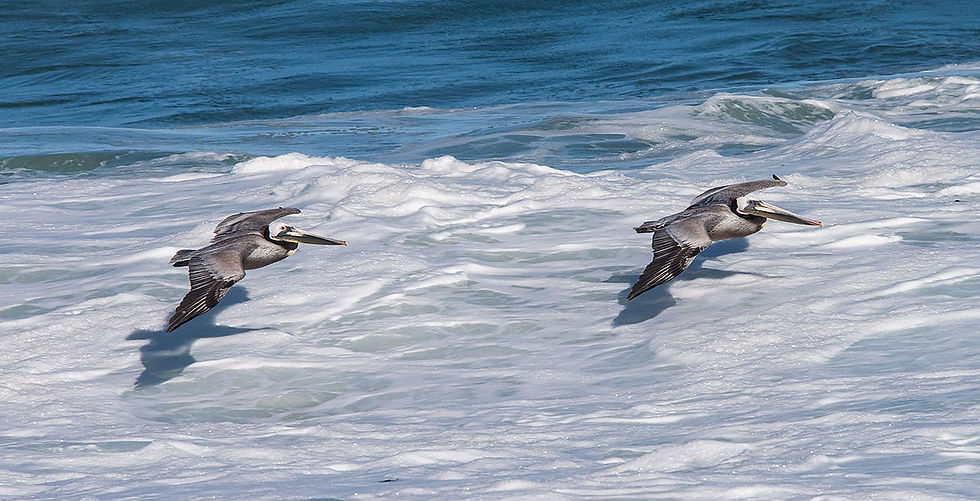
There are 8 types of Pelicans. Brown Pelicans are the smallest of all, weighing around 6 to 12 lbs. The Brown Pelicans pictured are currently hanging out with Frank near Monterey Bay on the Pacific Coast of California.


Their wingspan is between 6.5’ and 7.5’ wide and they can be between 39” to 53” in length. The male pelicans are noticeably larger than the females.
Under a pelican’s long beak is a ‘gular pouch,’ capable of holding up to 3 gallons of combined water and fish. Since three gallons of water weighs 25lbs, a 12-pound pelican probably wouldn’t attempt to lift that weight in flight. Luckily, the water drains out of the pouch and leaves the fish behind to be swallowed. A brown pelican tummy can hold one gallon of deliciousness.
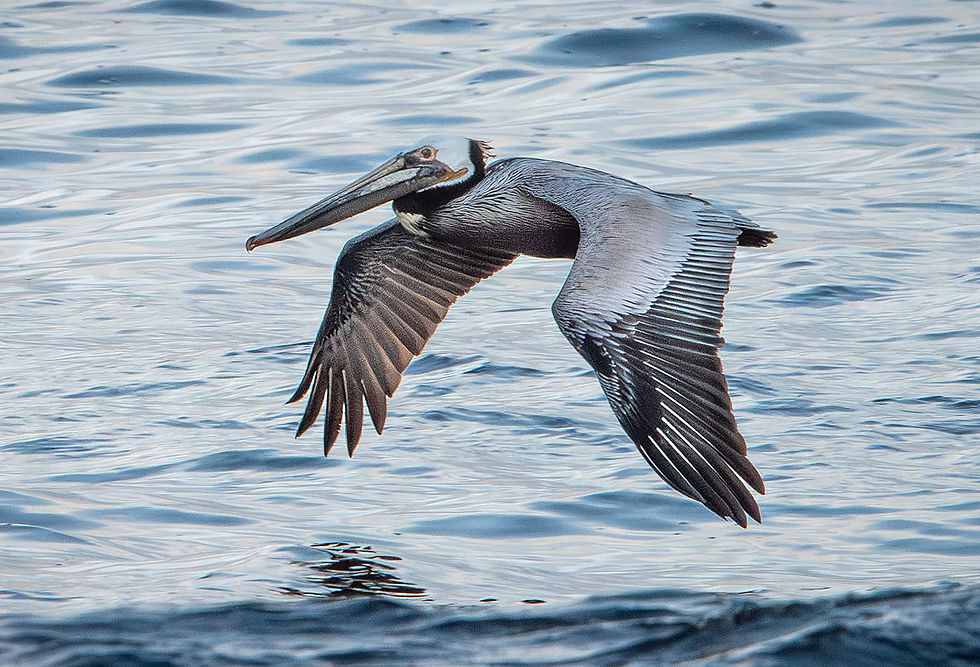
Brown Pelicans need to eat around 4 lbs of fish per day. That would be between 32 and 48, Pacific Sardines or Anchovies per day, (but there are, obviously, other fish in the sea).

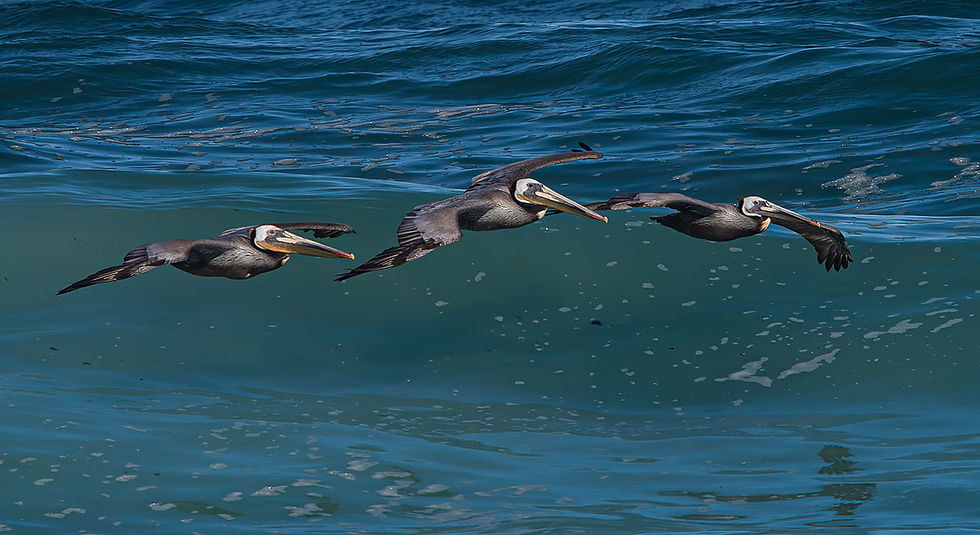


While pelicans hunt, they fly in groups, single-file or in a V formation. They work together to locate schools of fish near the surface of the water.
Brown Pelicans are the only pelicans that dive from the sky for their food. They can dive from as high as 60’ and they dive at a 90-degree angle, straight into the water! Thankfully, their trachea and esophagus are located on the right side of their necks, so as they dive, they can turn to the left at the last second to protect their right side, plus, it looks cool!
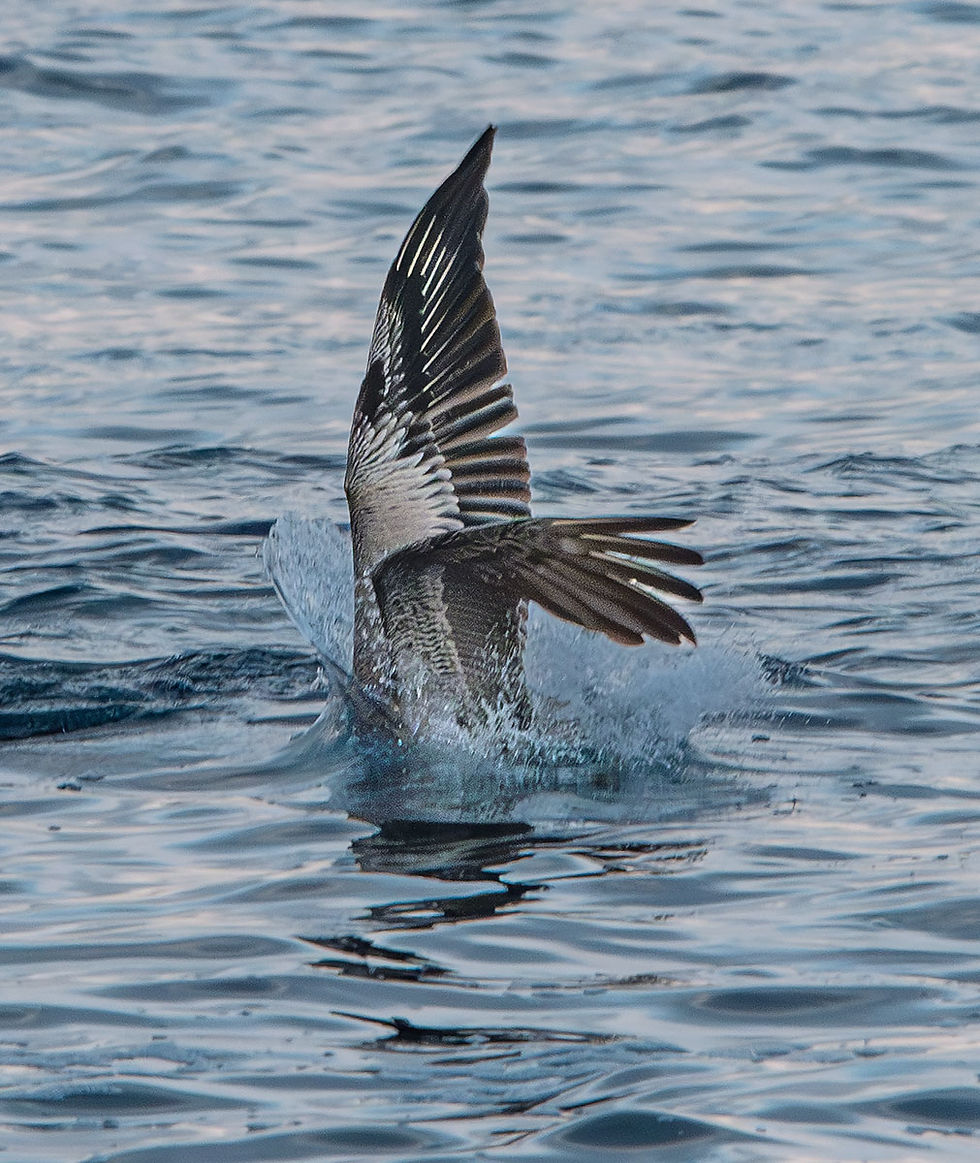
Pelicans have a complex respiratory system which includes air pockets beneath the skin on their neck, chest, tummy and in their bones. Without nostrils, they must breath through their beak and they are able to take in air and store it in little pillows throughout their body which also protects their bones and organs when they hit the water at 40 miles an hour!
I found a YouTube Video that explains: How Do Pelicans Survive Their Death-Defying Dives? (Link follows blog/letter).
Brown Pelicans are buoyant, they don’t dive deep and they don’t swim down, down, down to hunt. Even though they can dive from great heights, their dive is fairly shallow, they depend on surprising the fish, they also count on the fish being within reach.
As ocean surface temperatures warm up, fish swim deeper, into cooler waters, and pelicans do, often, face starvation.

Since pelicans have such large, stretchy beaks, a lot of their skin is exposed to the weather, and extreme temperatures.
When a pelican gets too warm, it will shake its beak pouch to cool off. Lots of blood vessels run through a pelican’s webbed feet and gular pouch. This vascularity is helpful in temperature regulation.
Though most Pelicans migrate to warmer places during the coldest times of year, these ‘warmer’ places can still get cold enough for water to freeze, the pelicans can still get frostbite on their feet and on their gular pouches. Brown Pelicans, especially, don’t do well in freezing cold temperatures. I found a YouTube video about a Brown Pelican that was rescued from a frozen lake, survived frostbite, and lives at Busch Wildlife Sanctuary. (Link follows blog/letter).
Pelicans have been known to live for 40 years but usually wind up enjoying life for a much shorter time.
We’re very grateful for all of the people that have made the choice to dedicate so much of their time, energy and resources to help protect creatures and habitats!


Thank you for being here to read Tracks by the Post. If you wish, please Write to Us, and let us know how you are doing, it’s always lovely to hear from you.
We continue to be mindfully grateful for the bounty of beauty on this planet, and that includes your gorgeous self!
Wishing you a week that feels like it really, really likes you.
Gently Be,
Leslie and Frank
PS: Here are the links I mentioned:
Pps: If you have stories and images about Nature that you'd like me to post in a future blog/letter entitled, Nature Shares, just contact us! (Yes, if you wish, your story may be shared while you remain anonymous).


